
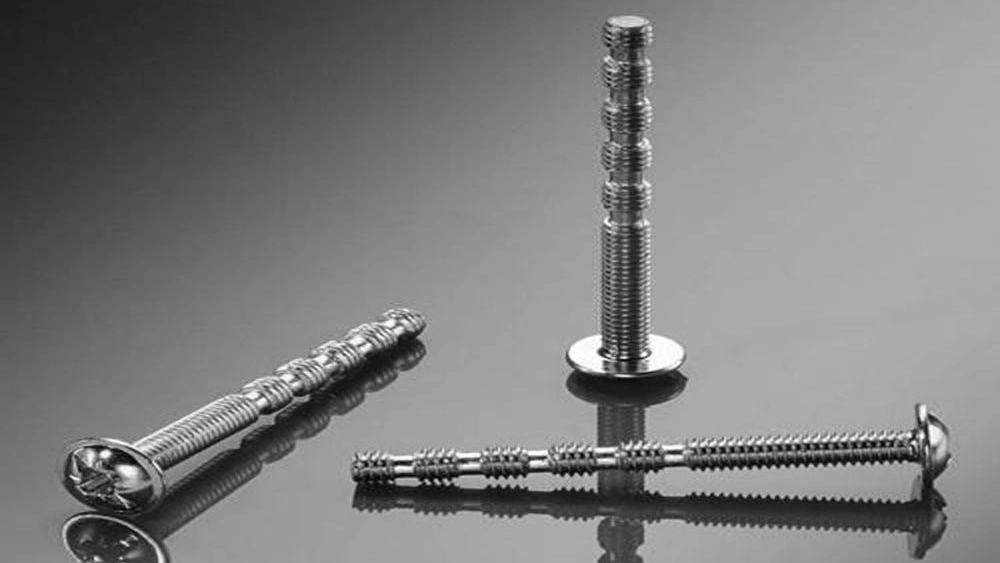
bolts as key components in industrial connections play a vital role in the structure of different equipment. From massive bridges and large and complex buildings to industrial cars and machinery, the durability and safety of these components have a direct impact on the overall performance of the system. However, one of the main challenges in the use of bolts is the corrosion and rust of these components that can lead to damage to connections and reduce the useful life of the equipment.
In the meantime, the cover of the dockmate has been considered as one of the most advanced methods of increasing the resistance of bolts to corrosion. This coating, with a combination of zinc and aluminum particles in an inorganic matrix, in addition to providing unique resistance to environmental factors, is also environmentally friendly than traditional coatings such as galvanized. On this page, you will be introduced to the bolts of the dockromate, the unique features of the doctrine coating, its benefits over other methods such as hot galvanized and the role of Salt Spray test in evaluating the quality of these bolts.
What is Docromate Bolt?
Docromate bolts are parts covered with a specialized cover called Dacromet. This coating is a solution of zinc and aluminum microscopic particles in a inorganic and water -based matrix. The process of applying this coating involves several main stages: the bolts are first cleaned and their surface is prepared for the coating. The doctrine coverage is then applied by spray or immersion of parts. At the end of this process, baking at high temperatures causes the coating to adhere to the metal surface and create a uniform and durable layer.
One of the main advantages of the doctrine compared to methods such as hot galvanized, lighter weight and less thickness of the coating, which maintains the dimensions of the bolts. Also, it lacks hydrogen, which prevents hydrogen fragility in the components. In addition, the dockmate performs better than other coatings because of its high heat resistant and corrosive chemicals. These bolts are especially used in sensitive industries such as automotive (in brake and chassis systems), marine industries (coastal structures and shipbuilding) and high -level industrial environments. The unique features of the dockromate make it one of the best choices in hard environments.
Salt Spray Test: Standard to ensure quality
Salt Spray Test is a standard test for evaluating the resistance of protective coatings, including dacromate coating, corrosion. In this experiment, the environmental conditions, which are the main corrosive cause of the components, are simulated to investigate the function of the coating against damaging factors such as moisture, salt and corrosion. This test is conducted in accordance with international standards such as ASTM B117 and ISO 9227. In this method, the samples are placed in the cabin and are sprayed with salt solution (usually 5%sodium chloride). The environmental conditions of the cabin include temperatures of 35 ° C and high humidity. These conditions are set to simulate a much more corrosive environment than natural conditions to provide a good guarantee for the resistance of the components.
The duration of the test indicates the quality and durability of the coating against corrosion. For the bolts of the doctrine, the test results are usually categorized in a timely manner: 500 hours: Minimum standard for general applications. 720 hours: suitable for medium moisture and salt environments, such as urban areas. 1000 hours or more: Guarantees of extraordinary resistance for industrial or marine applications with severe corrosive factors. Test standards mean that after spending a specified period of time, the level of the samples remains without any corrosion or corrosion. These criteria are directly related to the quality and durability of the coverage of the dockmate.
Using Salt Spray Test has made the manufacturers ensure cover performance in different situations, and customers choose the best option for their applications based on the results of this test. This experiment is a global criterion for ensuring the quality of industrial bolts
Production of quality bolts is a fully specialized task that requires high knowledge and experience in this field. Unfortunately, many parts of the market, due to their neglect of thermal operations, do not have a governorate production process and lack quality and efficiency. The thermal operations help us put the physical or chemical properties needed at the junction. For example, if we want to increase the strength of the bolt, we need to perform the heat treatment of the type of switching, or for example, if needed, the surface of the surface of the bolt can be useful. The different type of metal or steel alloy used in this process require special conditions in terms of temperature and timing. For example, if we cool it quickly after heating the steel, we have done the heat treatment of the quitting, but if the cooling is limited to ambient temperature or slows down, the tempting will be applied to increase the toughness. We recommend that you continue with us to explain to you a hundred bolt heat treatment.
Familiarity with the heat treatment of the bolt
When you decide to change the mechanical and physical properties of bolts, you need a specific executive process that is introduced as the heat of the bolt. The set of work that is implemented during heat treatment will eventually create our desired feature in the parts. The mechanical properties of metal parts, including bolts, are available depending on their structure, so by changing the structural status of these products, we can customize their physical and chemical properties. The heat treatment does this for us and provides the basis for improving the bolt structure.
One of the main advantages of heat treatment during bolt production is that it eliminates the stresses left behind. When we talk about the zero -bolt heat treatment, we need to consider different factors such as speed, temperature, time, and so on when applying thermal processes. It can also be implemented in a variety of ways, and if we do not pay attention to each of the methods, the output quality of the work will not be enough. World standards accompany us, and if we move on to them, we will experience the best situation in the implementation of heat treatment.
Stainless steel bolt
Steps to produce steel bolt
The first step is a woman who is made at this point in the upper part of the screw. To do this, it is necessary to send the screw material into the head with the help of a straightening tool to make the screwdriver according to the shape of the mold. After creating the head, it is time to design the thread. The screw thread is the inner part of it, which allows us to put it inside different structures. The thread is created by rolling the screw between the fixed and moving molds. Keep in mind that the steel bead is also made in the same condition using special bead molds.
In the next step, steel bolts enter the wash phase. At this point, the fats that are attached to the pieces are completely separated from them. Washing is done by special devices with high water pumping speeds. The thermal return process is then implemented on the stainless steel bolt, which occurs between 400 and 600 ° C. In the next step, the bolts are poured into the oil to get their temperature and cool. For some bolts and nuts, water can be used instead of oil. The temperature of the water or oil at this stage should be about 75 degrees Celsius. The bolts are now built and are ready for packaging. So they separate the screws and beads according to the type of construction and thickness to put it in their own packaging and market.